

Over the past few weeks, I've heard the same conclusion from engineering leaders, analysts, and other vendors in our space. AI made code cheap to write, and code review now limits how quickly it ships. If you run engineering as a software factory, review is the station that sets your output.
I agree with the diagnosis. I think much of the industry is stopping short of the solution. The popular answer is more visibility, with agents counted as contributors, AI spend next to throughput, and a cost per PR for the CFO. These metrics are important for understanding AI's impact and making informed investment decisions. But visibility alone doesn't move a pull request out of the review queue.
Reviewers accept AI-generated pull requests at 32.7%, compared with 84.4% for human-owned ones
Those figures come from LinearB's benchmark of 8.1 million+ pull requests from 4,800+ teams in 42 countries.
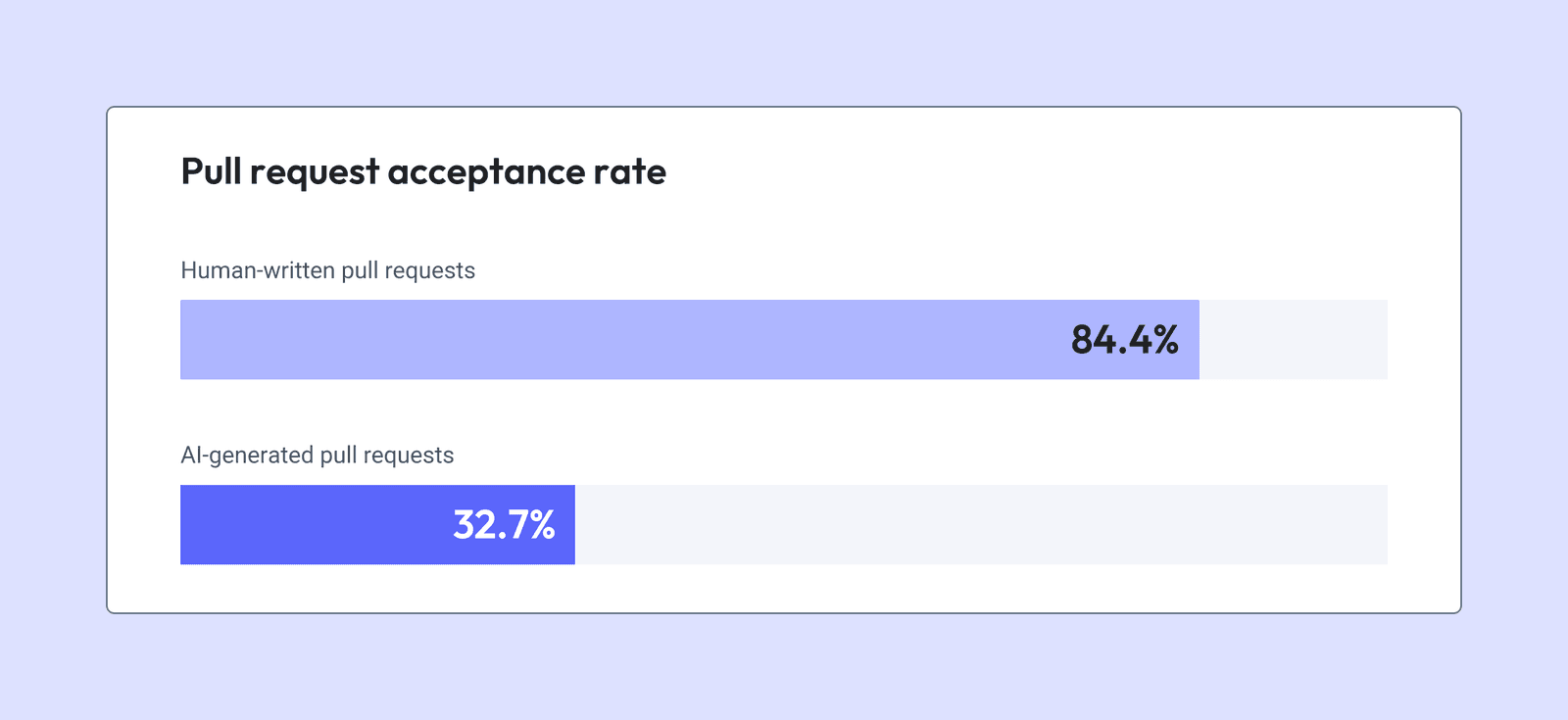
Every AI-generated PR takes a reviewer's time to evaluate, whether it merges or not. Agent output can grow overnight, while reviewer capacity grows at the pace you hire and onboard. Seeing the acceptance gap is the first step, and closing it means changing how work moves through review, including which changes need a person, which ones automation can clear, and how much each reviewer can take on.
Run review as a measured station in your software factory
Many engineering leaders now describe AI-driven delivery as a software factory, where coding agents, assistants, and developers move work through a line of stations from planning to production. In any factory, the slowest station sets the output of the whole line. Agents have sped up the coding station, so review now sets how much of your AI-generated work ships.
Improving review means changing how that station runs and checking what it passes downstream, in pull requests that merge, ship, and hold up in production. That starts with knowing where AI-generated work stalls, then tracking whether your changes shorten the wait, and then changing the workflow itself.
Find where AI pull requests stall, then clear them with LinearB
At LinearB, we call this loop Explore. Measure. Act.
Many platforms stop at measurement, but acting on what you find is what moves work faster through review. An AI assistant can chart your review backlog, but routing, checking, and approving the work in it takes automation inside the pull request workflow.
Explore where the gap opens
LinearB's AI & developer productivity insights label AI-assisted pull requests, so you can compare cycle time, pickup time and review time for AI-assisted and human-written work, broken down by team, tool, and pull request.
Track review time trends for each team
Use weekly or monthly trends in LinearB to see if pickup time (how long it takes until someone begins to review the pull request) and review time (how long it takes to complete the review and merge the PR) are growing or falling for the team. You can also compare these metrics across AI vs. human work, models used, and more..
Kraken, a fintech company with thousands of engineers, benchmarks each development group against its own baseline. The team used LinearB to break down where its merge requests slowed, and most of the delay traced to when reviews happened and who was available to do them.
"Size and complexity accounted for maybe 5 to 10% of the slowdown. 70 to 80% came from time zone differences, team silos, and reviewer availability. Engineers in one region were opening merge requests at a time that didn't line up with the code owners. The work just sat waiting for a reviewer who wasn't online, regardless of size."
Nik Sudan, Engineering Operations Lead, Kraken
Kraken cut review time by more than half in four months, from 2 days 15 hours to 1 day 3 hours at the 90th percentile.
Act on what the data shows
LinearB’s AI code reviews scan every pull request, including AI-generated ones, for bugs, security vulnerabilities, performance issues, and spec mismatches before a human reviewer picks it up. The review runs independently of the tool that wrote the code, so coders quickly get feedback they can act on, and human reviewers spend their time on the changes that actually need judgment.
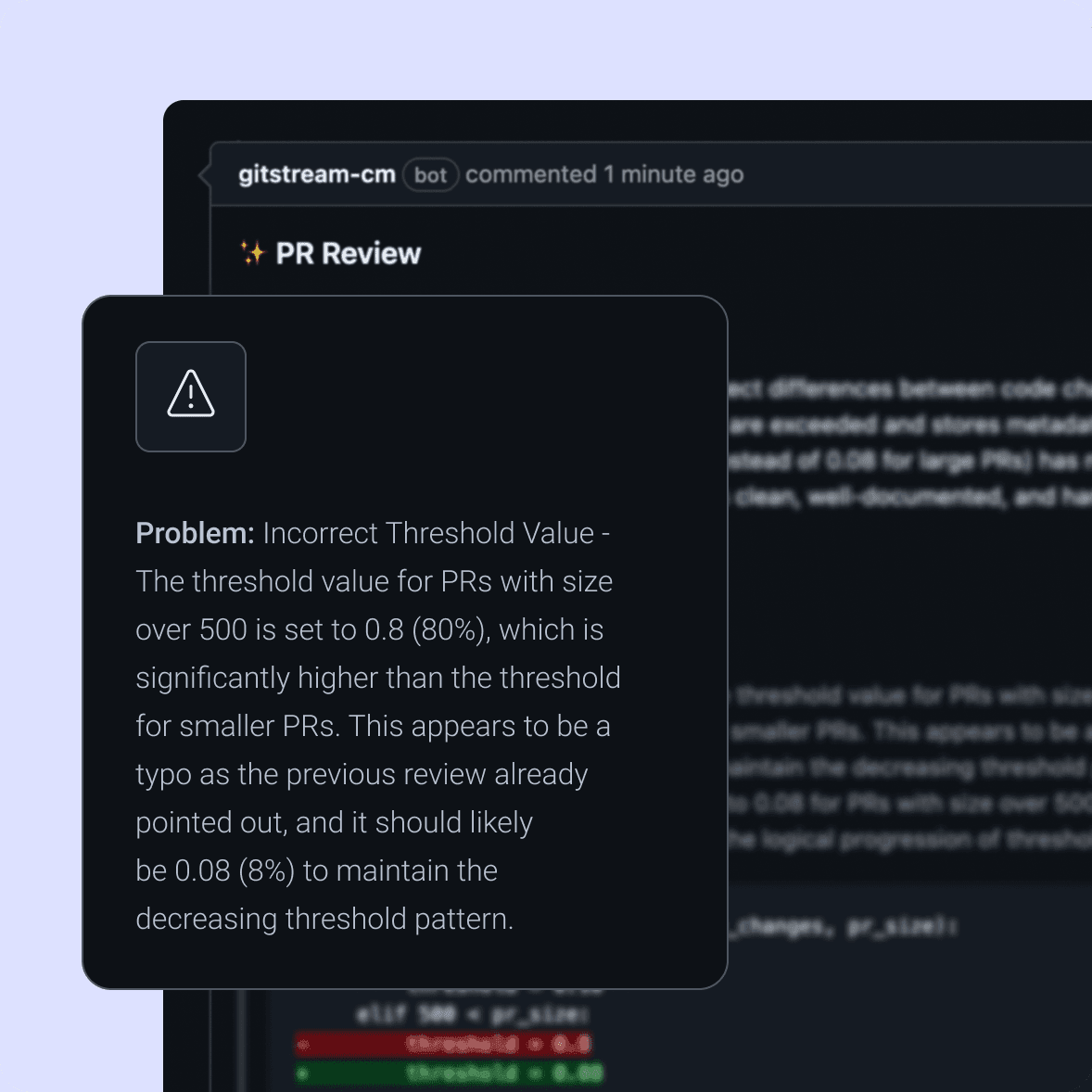
LinearB Workflow Automation turns your teams' rules into policy-as-code at the pull request level. It routes each change to the right reviewer based on risk, gates merges, and approves the changes your teams define as low-risk. LinearB also alerts a team when it's at risk of missing a review time goal, before the queue backs up.
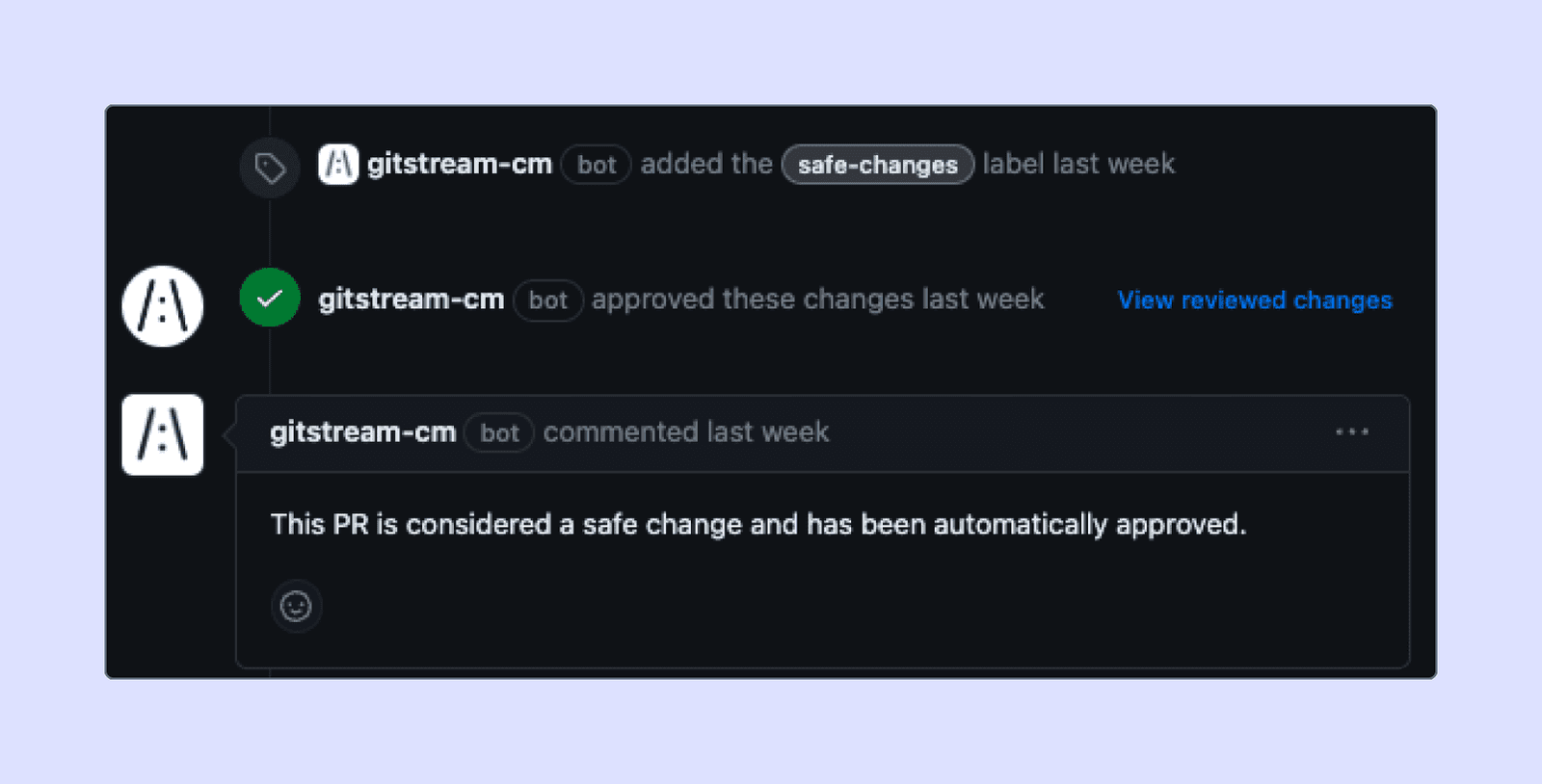
Yum! Brands uses LinearB to automate 35.8% of all its pull requests and save 321 developer hours a month.
Ship more of what your agents write
As your agents open more pull requests, the engineering organizations that ship more of that work will be the ones that decide which changes need a person, automate the rest, and measure how more of it reaches production each week.
Book a demo to see where your AI-generated pull requests stall in review, and how LinearB helps you clear them.